
When the weather turns cold, mice go looking for a warm, sheltered spot, and a parked car's engine bay is exactly that. Cars that sit for a few days at a time are the most inviting. Here is how to tell if you have visitors, what to do about it, and how to make your car less interesting to them.
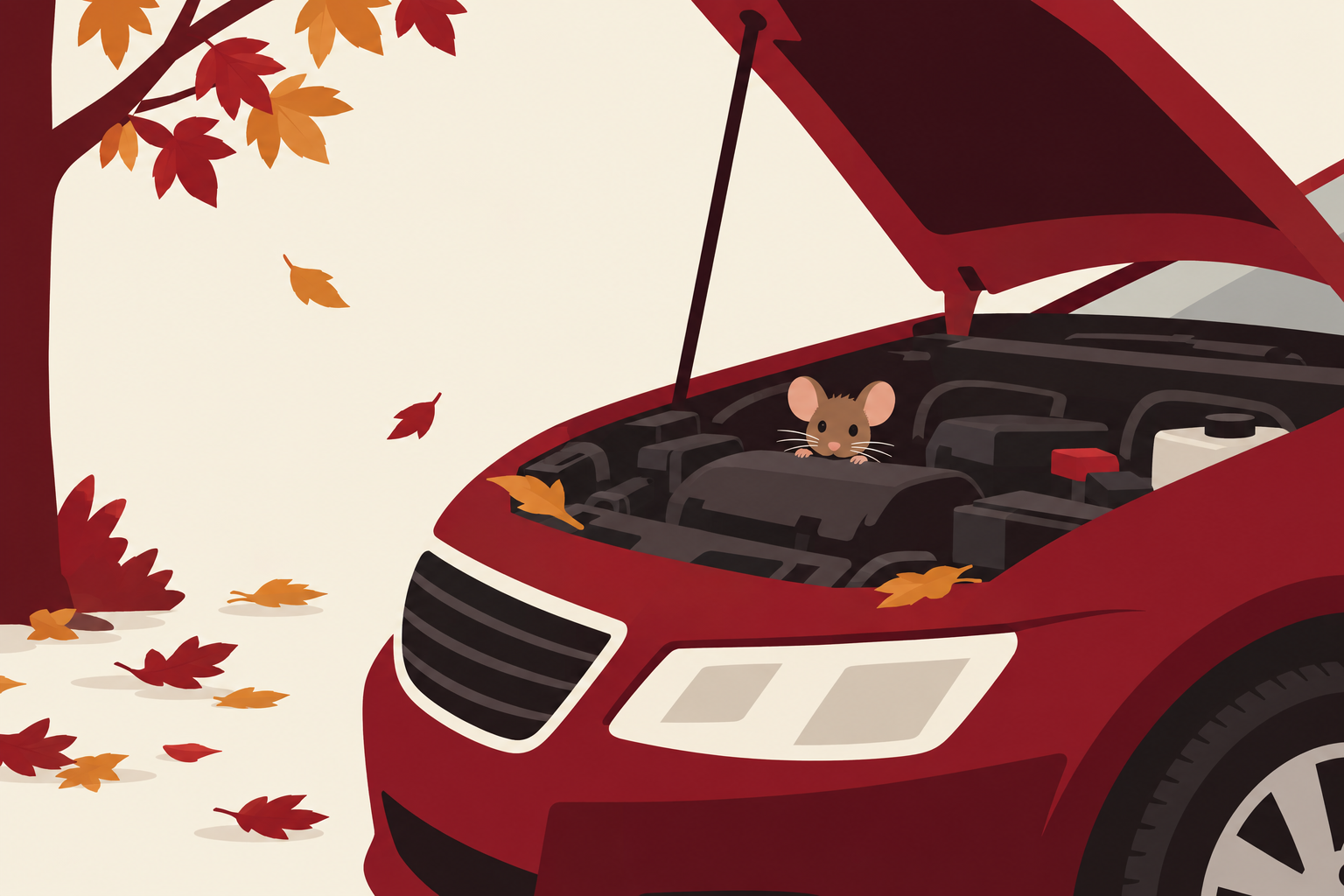
Signs to look for under the hood
- Nesting material: leaves, grass, shredded paper, or insulation tucked around the battery, the air filter box, or on top of the engine.
- Droppings on the engine cover or battery.
- Chewed wiring, hoses, or the insulation pad on the underside of the hood.
- A musty smell from the vents when the fan runs, which can mean a nest in the cabin air intake.
- Warning lights or electrical problems that show up after the car has been sitting. A chewed wire can look a lot like a failed sensor.
If you find a nest
Chewed wires are the part to take seriously. A damaged wire can cause a no-start, a warning light, or a short, and exposed wiring can make a car unsafe to drive. If you spot chewing on wiring or hoses, leave the car parked and have a mechanic check it. A burning smell from under the hood is a stop-and-check situation either way: pull over somewhere safe and shut the engine off.
If you clean out a small nest yourself, the CDC's advice for vehicles is to start with the car in fresh air, engine off and cool: open the hood and doors and let everything air out for about 20 minutes, and disconnect the battery before working around the engine bay. Wear gloves, soak the nest and droppings themselves with a household disinfectant (not the wiring and components around them), let it sit for 5 minutes or the contact time on the product label, then pick it up with paper towel and bag it. No vacuuming or pressure washing until everything has been disinfected. If the nest was in the air intake, the air filter gets replaced too. A heavy infestation, or a nest deep in the air box or cabin intake, is a job for professionals: pest control for the source, a mechanic for the car.
What a visit looks like
Call (604) 606-7509 and tell us what you found. We come to you, inspect the wiring and hoses around the nest area, and tell you what is damaged and what is fine, so you only fix what actually needs it.
Keeping them out
- Drive it. A car that moves every day or two is a far less appealing home than one that sits. Our guide to cars that sit covers what parking long-term does to the rest of the car, too.
- Keep food out of the car, and keep pet food, birdseed, and garbage away from where you park.
- Where you can, avoid parking right beside woodpiles, tall grass, or dense shrubs.
- Pop the hood for a quick look every week or two through the fall and winter, especially if the car sits. A fresh nest is a much smaller problem than chewed wiring.
- Scent deterrents such as peppermint oil or dryer sheets get mixed results, and the smell fades. Treat them as an extra, not the plan.
Common questions
Can chewed wires wait?
Wiring damage tends to get more annoying, not less: intermittent warning lights, a sensor that seems to fail for no reason, or a no-start on a cold morning. It is worth having checked soon rather than after something stops working.
I only found nesting material, no chewing. Can I drive?
Damage is not always easy to spot: wiring can be chewed inside its covering, and a quick look can miss it. If you are not confident everything is undamaged, have the car inspected before driving it rather than finding out on the road. Any visible chewing, warning lights, odd smells, or electrical glitches means leave it parked until a mechanic has checked it.
Why did they pick my car?
Warmth and shelter. A recently driven engine stays warm for hours, the engine bay is dry and hidden, and a car that sits undisturbed is the easiest one to move into.
Related services
Call (604) 606-7509 and tell us what you see. We come to you across the Lower Mainland, 7am to 7pm every day.